I Don’t Get Bonds

Photo by Jason Dent on Unsplash

Riddle me this: why choose bonds over a high-yield savings account?

My bond portfolio has just sucked. The market goes up, and bonds go down. The market goes down, and bonds go down slightly less. Interest rates go up, bonds don’t move. Sure, there’s the dividend. However, when dividends return at best around 2.5%, that doesn’t make up for my bond ETF being underwater since Feb 2022. And it wasn’t that great in the prior years, either. 

I like to do what I call the 1K Test. If you had two piles of $1,000 and chose to invest them using two different strategies, which wins? I use a five-year window, but you could do ten. The ten-year window can be a little rosier, so I prefer the harsher five. 

Let’s look at my bond ETF. My $1k worth of BND on 1 Jul 2019 is worth $868 today. Ouch. But what about dividends? On $1k, they’re about $24 per year, or about $120 since 2019. So, bottom line, I started with $1k in 2019 and now have $988. That’s not so hot. 

Let’s apply the 1K Test to a high-yield savings account, which is pulling around 5% these days. Of course, interest rates five years ago were less than a percent. Even adjusting for historical rates1, $1k put into a standard savings account in 2019 would now be worth $1094. 

Winner, by $182 (or a whopping 18.2%) margin: the humble savings account. 

Why even make this comparison? Ultimately, I’m measuring performance against a purpose. Bonds and savings accounts are meant to buffer my retirement should the stock market go sideways (see 2020-2023 and then some for an example). During those down periods, I’ll need funds to tide me over so I don’t sell stocks (or withdraw from my 401K) when they’re in the hole. I’m not shooting for a balanced portfolio; I don’t need a cookie for meeting somebody’s idea of financial prudence. I need a safe buffer for when the bear comes out of hibernation to eat my stocks for breakfast. 

When I do the math, bonds don’t seem to fit my purpose as well as savings accounts. Sure, the Fed will lower rates, taking down retail interest rates in short succession. But I can hedge that risk with CDs. I can balance safety and liquidity with a CD ladder or something similar. Should interest rates bottom out to 2019 levels, I can always buy bonds (or bond ETFs) at the time; it’s not like I won’t see it coming. 

To close, am I smarter than all the financial advice carefully built up from decades of data? Nope. But I think that data is outdated. Like a balanced breakfast, a carefully balanced portfolio has become the goal, even if it never should have been. Ultimately, your retirement portfolio should meet your needs, and when I look at mine, I think it’s time I ended a bad relationship with everyone’s safest investment. 

  1. Historical sources
    Finder.com, Historical Savings Rate (2019-2022)
    USAToday.com, Savings Account History Rate (2021-2024)
    BND historical values ↩︎

Was it bad for you?

As a coincidental follow-up to my recent post, the Slow and Steady Drain, I’d like to share an excellent video from my favorite finance vloggers Two Cents:

It hits all the right notes with regards to what has become a fact-free “vibe-cession”.

Financial Advisors: Shit or the Shittiest?

Photo by Shane on Unsplash

Retirement planning is hard. Sure, there are simple techniques anyone can use to map a path. Yet those techniques require data and effort. Most people don’t want to spend precious free time crunching numbers and making tough, life-impacting decisions. Most people – myself included – would rather find someone who can just take care of it. You know, a Guy (here used in the gender-neutral sense).

I know more than a few people who have found their Guy: a personal finance manager who promises to make retirement all anyone could ever hope for. They’ve got products that minimize risk and maximize gain. They promise they can beat the market and, in return, ask for a mere few points off the top. You know, for the effort.

I don’t buy it for a second.

Continue reading →

The Slow and Steady Drain

Read the article. No notes. Ironically coming from a subscription-only site (but the above link is free).

The average consumer spends $273 per month on subscriptions.

2021 poll of 2,500 by digital services firm West Monroe

Continue reading →

Good News yet no Good Vibes

Photo by Bob Coyne on Unsplash

I’m delighted to see inflation coming down. Add to that, all the good news around unemployment, consumer demand, and gains in The Market paints an increasingly rosy picture. It’s all awesome, right?

Not so fast.

Continue reading →

An EV Retirement

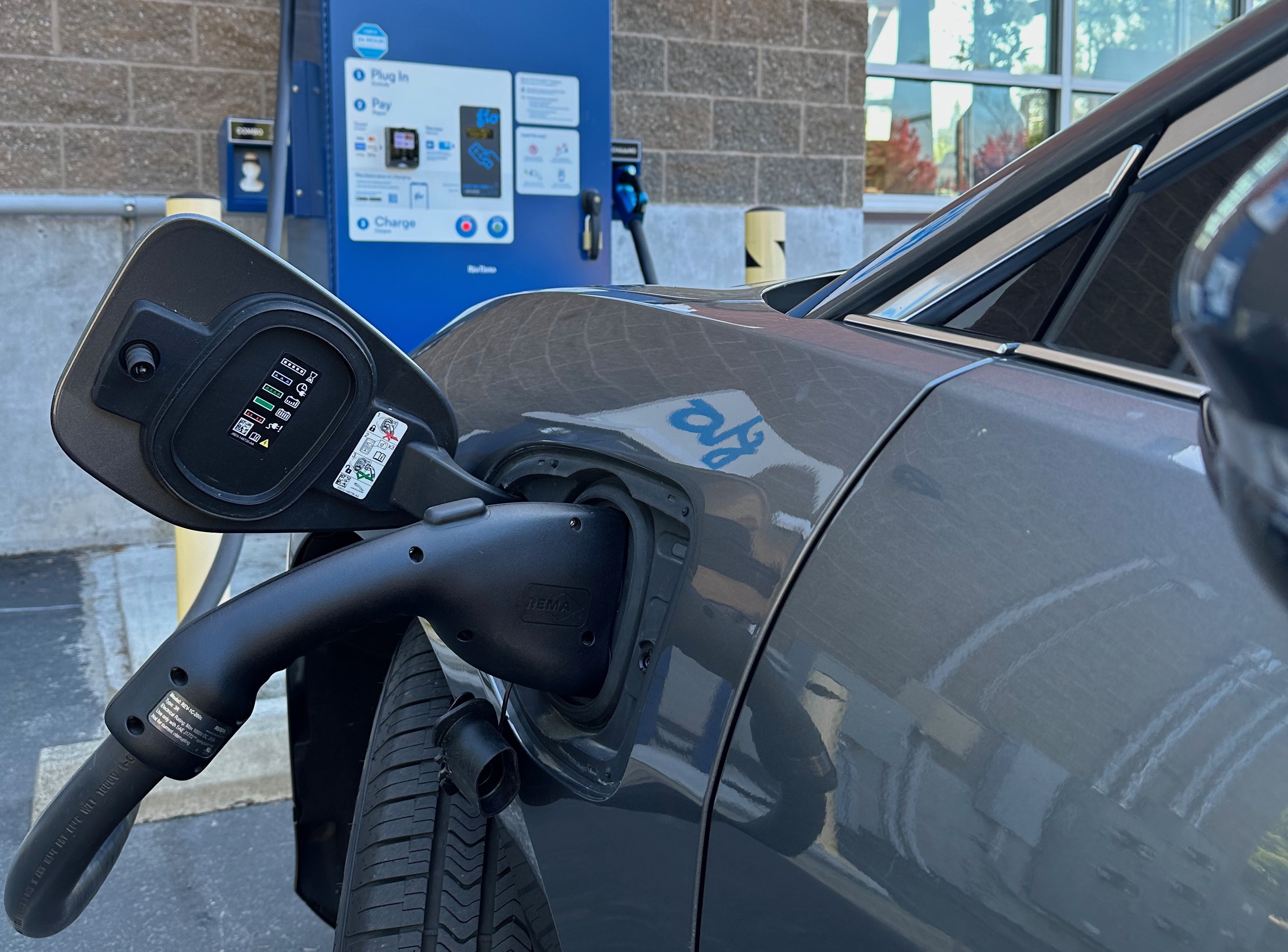
Jaguar I-Pace at Flo commercial charger, photo copyright Stuart DeSpain

Electric cars generate a lot of passion. Like pretty much everything, nowadays, divisions run deep. I happen to believe climate change is a very real and very significant threat to our survival (probably lost a lot of readers there) but I’m not here to make an environmental statement. This blog is about finances so I’m here to talk money. Specifically, I think EVs can play a role in reducing financial risk.

Continue reading →

What’s driving layoffs?

We like to believe that companies – especially big tech – make decisions based on data. Those of us who’ve worked in tech know all to well that data-informed is too often another form of confirmation bias.

Continue reading →

IRS adjusts brackets, limits for 2023

Photo by Leeloo Thefirst

Every year the IRS adjust things like brackets, deductibles, retirement plan limits, and etceteras. 2023 is no exception and, with inflation at-or-near double digits, these adjustments are worth paying attention to. A few highlights:

401k Limits

The headliner for this crowd is we’ll be seeing increased limits for 401k contributions. Individuals will now be able to contribute up to $22,500 in 2023 – up quite a bit from 2022’s $20,500 limit. The 50+ crowd – eligible for the “catch up” contribution limit – sees there limit rise to $30,000 in 2023.

Other retirement account contribution limits were raised as well. Check out this article from the Hill for further details.

Continue reading →

Well hasn’t this been a fun month?

Photo by Jp Valery on Unsplash

September 2022 looks to be the worst financial month in recent memory. Until October. I guess we’ll see.

The Fed raised interest rates. The tech sector – led by Adobe Systems acquisition of Figma – bombed hard, with the S&P 500 losing 7% in the first three weeks of September. Inflation, while possibly slowing, is still no bueno. Even if you’re not following finance it’s hard to escape gloomy news tracking the spiral.

It might be easy to assume this doesn’t touch anyone outside the moneyed classes. Well, that would be wrong. Remember, pain always rolls downhill. We’re all in a place where making informed financial choices is more important than ever.

Continue reading →