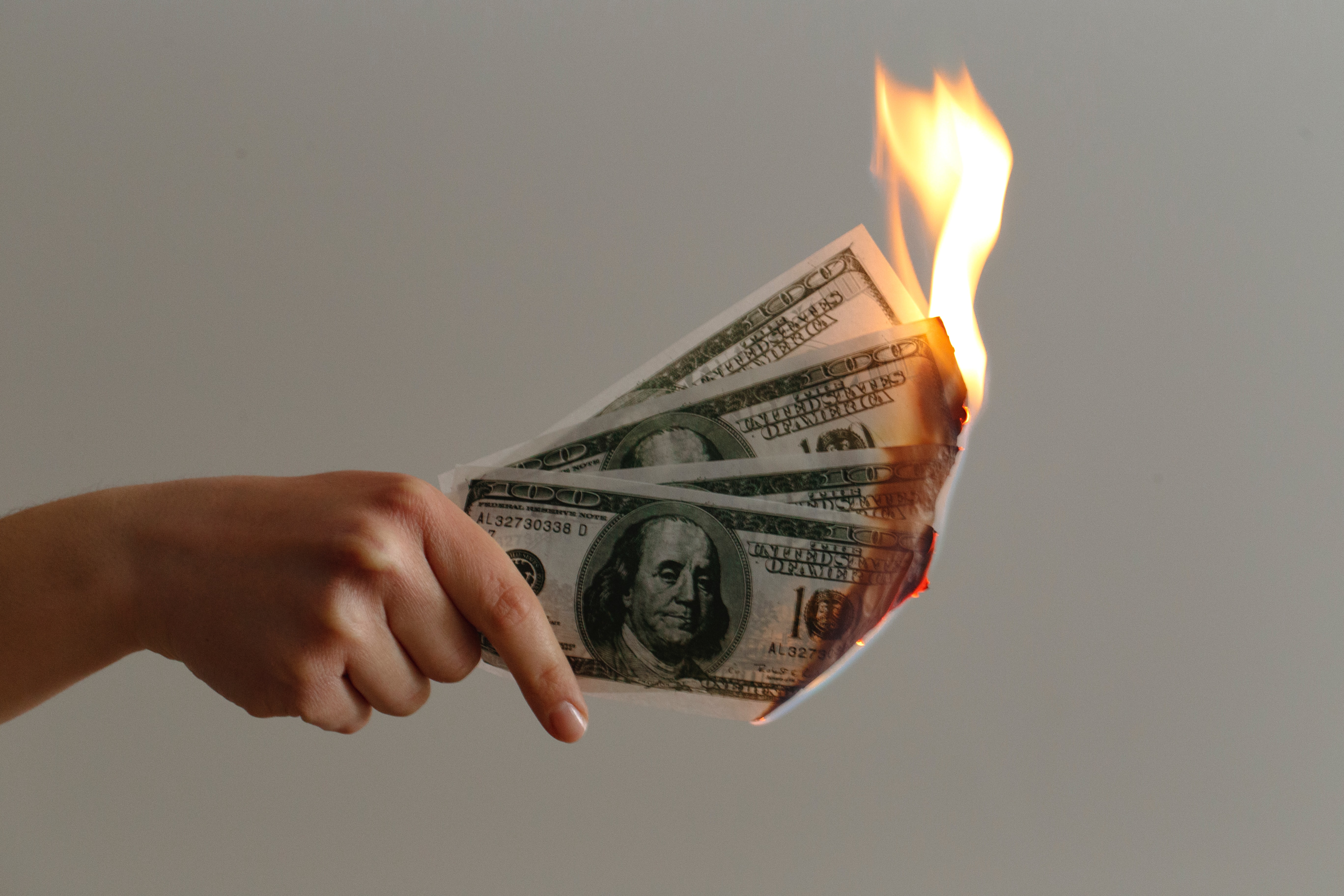
September 2022 looks to be the worst financial month in recent memory. Until October. I guess we’ll see.
The Fed raised interest rates. The tech sector – led by Adobe Systems acquisition of Figma – bombed hard, with the S&P 500 losing 7% in the first three weeks of September. Inflation, while possibly slowing, is still no bueno. Even if you’re not following finance it’s hard to escape gloomy news tracking the spiral.
It might be easy to assume this doesn’t touch anyone outside the moneyed classes. Well, that would be wrong. Remember, pain always rolls downhill. We’re all in a place where making informed financial choices is more important than ever.
SFU favorite Yahoo Finance has a nice piece looking back at historical trends.
Today, with the stock market in meltdown mode, it’s natural to look back at other times of financial woe: The Great Recession of 2008-2009. The bursting tech bubble in 2000. The crash of 1987, never mind 1929 — and all manner of mini-downturns and flash crashes in between.
Andy Serwer with Dylan Croll, Yahoo Finance
We should be asking ourselves two questions:
- How do we insulate ourselves from harm?
- Are their opportunities to take advantage of?
Avoiding Harm
The first harm to guard against comes from inside the house: fear. You may be watching your portfolio drop in value and think, damn, I need to sell this off before it gets worse! While circumstances vary, you probably don’t want to (as the experts call it) realize the loss. This is a fancy way of saying portfolio loss is only real if you make it so by selling stocks (or moving things around in your 401k).
We have decades of data that show the market always recovers. Always. See for yourself by looking at any index history. You know the saying: buy low, sell high. That is solid advice for those of us who are primarily invested in index funds (NASDAQ, S&P 500, 401k funds, etc). As the market recovers, index holders will recover as well. So an easy way to insulate yourself from harm is just don’t sell stuff. As I’ve learned, doing nothing is pretty easy.
If you have individual stocks the decision may not be as clear. Some corporations have lengthy histories so past performance can help guide you. Larger corporations are often subject to public commentary, so there’s lots of free advice on whether or not you should buy, sell, or hold. If you want to go even deeper, there’s a lot of information out there on how to read P/E Ratios, market cap, and stock performance history. I’m not a single-stock investor so this blog is a crappy place for advice on that topic (or most, for that matter). I would say the most determinant factors in any endeavor are preparation, preparation, and preparation. Always do your research.
Even if you don’t have stocks or a 401K, there are other kinds of harm you can avoid. Inflation is driving up pretty much everything. Increased transportation costs, scarcity of specialty parts, and constrained labor markets will be jacking up prices for some time. So, one easy thing to do is don’t buy stuff.
Big ticket items, like cars and home appliances, represent the biggest harm. If you can put off the purchase for a wee bit, you’ll be doing yourself a couple of favors. For one, you’ll be giving your income a chance to gain ground against the purchase price of said big ticket. While income rarely rises faster than cost-of-goods, the gap does shrink at certain points. Second, I’d bet economic conditions will depress demand, meaning big ticket items will be discounted making them more affordable. Third, the item you want is more likely to show up in the used/refurbished marketplace the longer you wait.
Economic downturn harm is also mitigated by watching your regular budget more closely. If you don’t have a monthly budget, now would be a good time to get one. I’m not big on hitting the exact dollar number every month; it’s more of a guide that helps me make smart choices. There are lots of tools out there (like Mint) that make home budgeting pretty easy.
To sum it up, avoid harm by not selling stuff, not buying stuff, and keeping an eye on your monthly spend.
Finding Opportunities
Adhering to the “buy low” part of the successful investors formula, 2022 is clearly a “buy” year. The question is buy what?
The easier and safest choice would be (of course) index funds. Since the market always recovers (always) then buying index funds means you get a piece of that recovery. Just be sure you choose your index funds (or ETFs or whatever) carefully. I’m a fan of Vanguard index funds because they’re low cost (VOO or VOOG are good examples of what I mean). Fidelity also has some solid choices. Just be sure whatever you choose isn’t burying your grains with fees.
Referring back to the Yahoo finance article by Andy Serwer and Dylan Croll (see above), lulls like this one can make individual stocks more interesting. For example, consider ADBE. Motley Fool (not always the best advice, but not always the worst) sums it up pretty well:
Adobe had been an expensive stock over the past few years, but its P/E ratio has now fallen to below 30 — the lowest level since 2013. Strikingly, Adobe’s market cap has fallen by some $35 billion since the Figma announcement — more than the $20 billion acquisition price!
Billy Duberstein, Motley Fool
Unlike stocks, bonds, or real estate, it turns out that Treasury yields are on the rise. If you’ve got the cash lying about then consider investing it there for the short term.
For those feeling especially bold there are plenty of financial opportunities that might mean you gain from another’s loss. Take, for example, Meme Stocks. I suspect many fund managers will be shorting stocks as the market contracts. Meme stock boards may get thick with recommendations. Of course, this is highly risky and ethically dubious. But that’s the subtitle of our general economy (not to be a moral relativist).
Aside from financial markets, it’s fair to expect contraction in other sectors.
Housing prices are likely to fall along with rising interest rates. If you’re lucky enough to have a sizable down payment (perhaps through the sale of an existing property), it’s going to be less crazy to buy a new house. If nothing else you’ll have time to make an inspection before closing the deal. So, yay?
Retailers are likely to offer discounts to offset shrinking demand. I’m no coupon-cutter but this is probably going to be a good time to track things like Amazon’s Prime Day, Woot, and/or whoever your favorite online retailer might be. Consider joining coupon sites like Honey to get the best deal no matter where you shop.
As people downsize I would expect a spike in used goods. If you’ve been pining for some crazy-expensive indulgence, you might consider creating an eBay saved search to get a heads-up on great deals. Also check out your local Buy Nothing group (typically found on Facebook) whether you’re looking for something or letting go of things you no longer use.
To sum it up: buy safe securities when low, look for bargains on the internets, and share the stuff you don’t need.
When will it end?
Whether your mitigating pain or finding opportunities, the thing we all want is for the craziness to end. As many have observed, we want a “V” or “U” shaped recovery (where things quickly rebound to normal) and not a “W” shaped insanity (where things constantly oscillate between better and worse).
There’s not much we, as individuals, can do to determine the shape or duration of the recovery. Economies of this scale don’t lend themselves to easy fixes and we should be very skeptical of any broker, politician, or advisor that suggests they alone can make it better. Sometimes you just need to give things time.
In most cases these downturns last less than two years (17 months is the longest). In the 1970s we bounced around for a decade. I happen to think we’ve learned enough to avoid the latter case and remain optimistic that we’ll be back in growth territory by late 2023.
To sum it up: nobody knows so buckle up.
 superfoo kinguseless